
Ultimate Foundation Repair Products For Long-Term Structural Support
Explore high-quality products engineered to provide enduring foundation stability and prevent future issues.
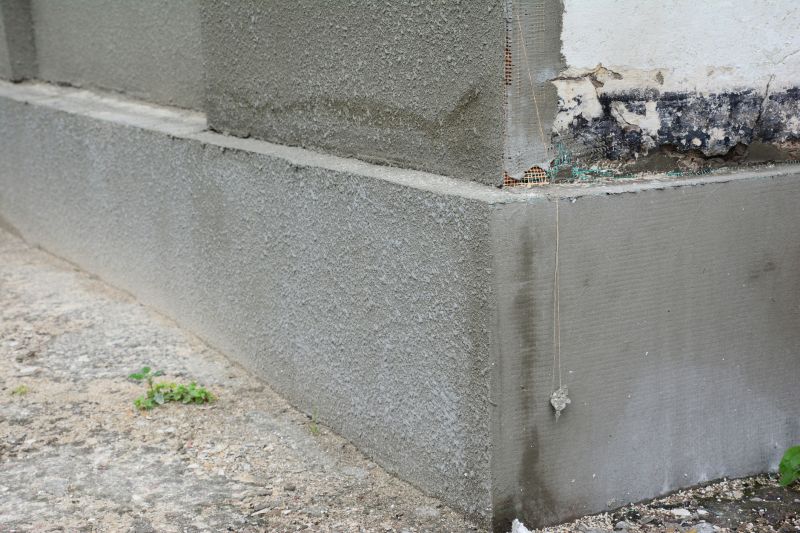 Foundation repairs are a critical aspect of maintaining the structural integrity of a building, especially in areas prone to soil shifting, moisture fluctuations, or settling issues. When considering products for foundation repair, it is essential to evaluate options that address specific problems such as uneven settling, cracks, or water intrusion. A wide range of repair solutions exists, from simple reinforcement methods to complex underpinning systems, each designed to stabilize and strengthen the foundation effectively.
Top Overall Option
Adjustable Pier System
An adjustable pier system provides a versatile solution for foundation stabilization, allowing for precise height adjustments to accommodate shifting soil and uneven settling. These systems typically consist of steel piers that are driven deep into stable soil layers, with a top plate that supports the foundation load. The ability to fine-tune the height ensures better alignment and support, making them suitable for a variety of foundation types and conditions.
Types of Products For Foundation Repairs
Concrete Push Piers
Steel piers driven into stable soil layers to provide foundational support and lift sinking structures.
Helical Piers
Rotatable steel piers that screw into the ground, ideal for difficult soil conditions and limited access areas.
Slab Jacking Materials
Materials used for raising and leveling concrete slabs, including polyurethane foam and mudjacking mixtures.
Epoxy Crack Fillers
Specialized epoxies formulated to seal cracks and restore the integrity of concrete foundations.
Waterproofing Membranes
Materials applied to exterior or interior foundation surfaces to prevent water infiltration.
Drainage Systems
Solutions such as French drains and sump pumps designed to divert water away from the foundation.
Soil Stabilizers
Chemical or mechanical agents used to improve soil stability around the foundation.
Underpinning Systems
Support structures that extend the foundation depth to more stable soil layers.
Vapor Barriers
Materials installed to control moisture vapor migration through foundation walls.
Foundation Braces
Supports used temporarily or permanently to reinforce walls and prevent further cracking.
Polyurethane Foam Injectors
Injection systems that lift and stabilize sinking slabs or foundations with expanding foam.
Steel Support Beams
Horizontal or vertical steel supports used to reinforce weak or cracked foundation structures.
Grout and Mortar Patches
Materials used to fill and seal foundation cracks and voids.
Foundation Anchors
Anchoring systems that secure the foundation to the surrounding soil or structure.
Radon Barriers
Sealing materials that prevent radon gas infiltration through the foundation.
Vibration Dampers
Devices that reduce structural movement caused by external vibrations or soil shifts.
Popular Choices
Flexible support systems that can be adjusted to lift and stabilize foundations with uneven settling.
Quick and minimally invasive solutions for lifting and stabilizing concrete slabs and small foundation areas.
Effective for sealing cracks and restoring concrete integrity in foundation walls.
Essential for diverting water away from foundations, reducing moisture-related issues.
Commonly used to protect basement walls and foundation exterior surfaces from water intrusion.
Popular for their ability to be installed in challenging soil conditions and limited access points.
Tools and materials designed to lift and level uneven concrete slabs efficiently.
Steel or wood beams used to reinforce and stabilize compromised foundation walls.
Widely used to control moisture and prevent vapor transmission through basement floors.
Popular for improving soil load-bearing capacity around foundations.
Commonly applied to basement floors and walls to mitigate radon gas entry.
Adjustable posts used temporarily during foundation repair or renovation projects.
Widely used for sealing cracks and preventing water intrusion in foundation walls.
Installed around the foundation to facilitate water runoff and reduce pooling.
Popular for stabilizing and reinforcing compromised foundation structures.
Devices used to minimize movement and stress on foundation walls caused by external forces.
Selecting the right products requires understanding the nature of the foundation issue, the type of soil, and the construction of the building. For instance, hydraulic jacks and pier systems can lift and stabilize settling foundations, while epoxy injections can seal cracks and prevent further damage. Drainage solutions and waterproofing materials are also vital to protect the foundation from water-related problems that can accelerate deterioration.
Proper installation and quality materials are crucial to ensure long-lasting results. Consulting with foundation repair professionals can help determine the most appropriate products and methods for your specific situation. Whether dealing with minor cracks or significant structural shifts, the right combination of products can help restore stability and prevent future issues, ultimately safeguarding your property and investment.
In Conway, Arkansas, where soil conditions and weather patterns can influence foundation health, choosing reliable and durable repair products becomes even more important. Being informed about available options and considerations can help homeowners and contractors make well-informed decisions, ensuring the longevity and safety of the structure.
Key Buying Considerations
- Assess the specific foundation problem, such as cracking, settling, or water infiltration.
- Determine the soil conditions and moisture levels around your property.
- Choose products compatible with your foundation type (slab, crawl space, basement).
- Consider the long-term durability and material quality of the repair products.
- Evaluate the ease of installation and whether professional assistance is recommended.
- Check for warranties or guarantees offered by the manufacturer or installer.
- Ensure products are suitable for the climate and weather patterns in Conway, AR.
- Compare the cost-effectiveness of different repair options and materials.
- Look for products that allow for future adjustments or repairs if needed.
- Verify that the products meet local building codes and standards.
- Consider the environmental impact, if relevant, and choose non-corrosive materials.
- Assess the compatibility of repair products with existing foundation materials.
- Review customer feedback and professional recommendations for reliability.
- Determine the availability of replacement parts or supplemental products.
- Ensure proper installation procedures are followed for maximum effectiveness.